Weak or manual product recommendations
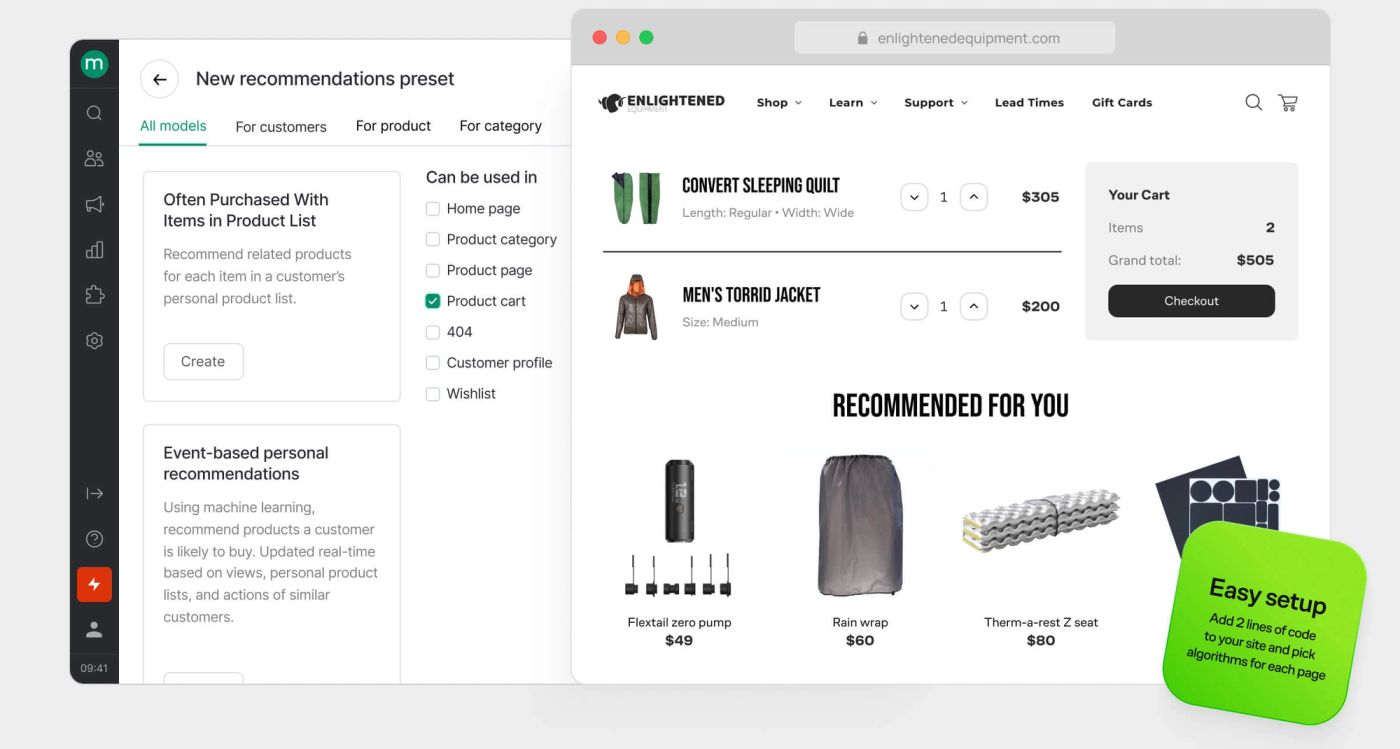
Four thousand SKUs is too many for a shopper to browse
Maestra Platform narrows the catalog per visitor, an all-in-one retention marketing platform for ecommerce brands, launched by your forward-deployed marketer.
27%
reduction in marketing stack costs
Brands running on Maestra






The problem
Customers stay in one category and never see the rest of what you sell
Without automated, behavior-based cross-sell, shoppers who love one product line rarely discover adjacent ones. Campaigns end up treating every customer the same, missing the natural next purchase that's sitting right in your own catalog.
What we hear from brands
a natural body-care brand has limited ability to cross-sell soap buyers into skincare, with campaigns that treat all customers the same
a designer home-decor brand lacks automated product cross-sell flows and custom data points like product-view events
an online seafood purveyor cites limited cross-sell visibility and the need for better flow optimization and A/B testing
The new way
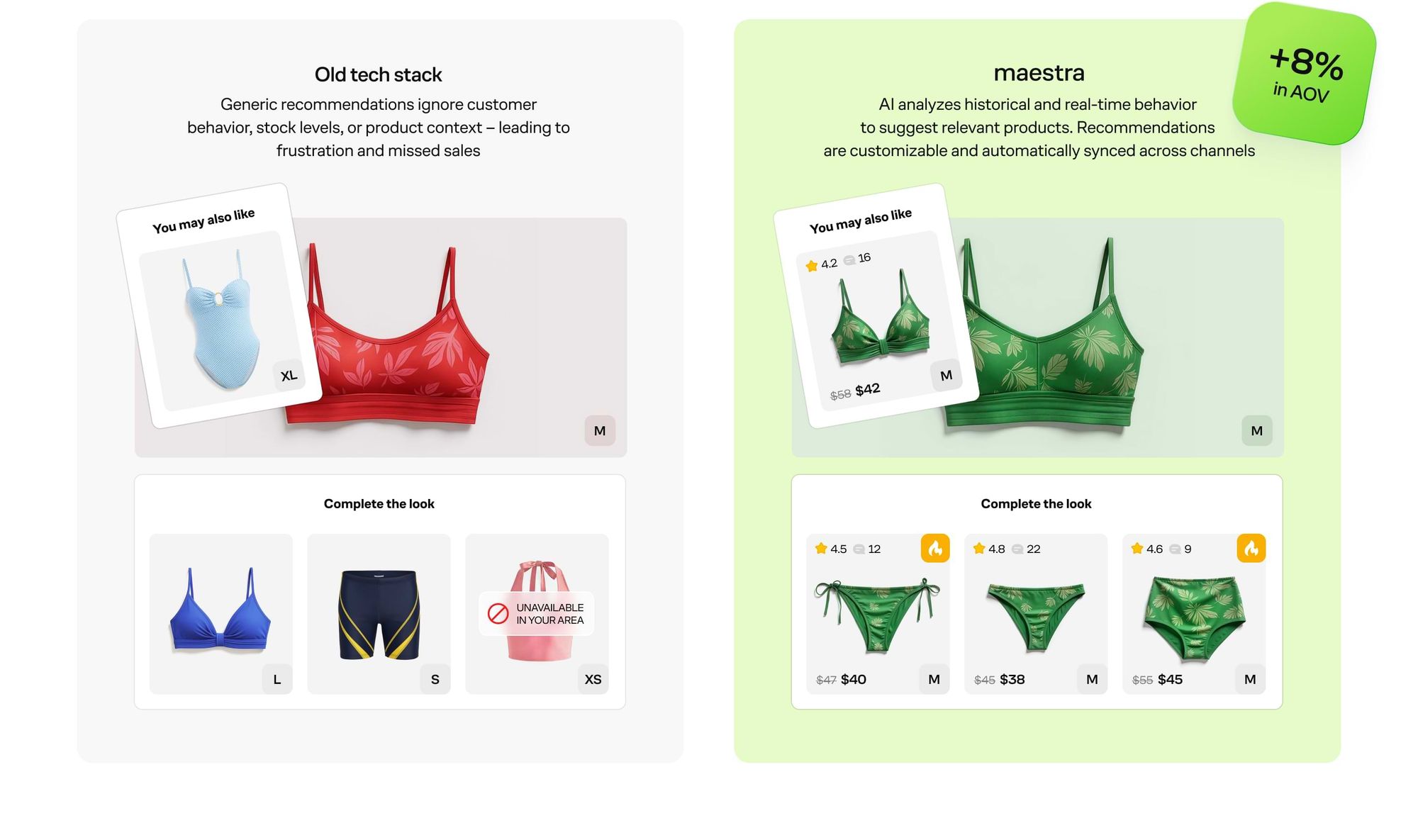
Matching that understands color, size, and material, not just category
Instead of grouping products by broad category, Maestra reads full product attributes so a red bikini top surfaces its matching bottom in the same size, material, and cut. Out-of-stock sizes are filtered out automatically, so customers never hit a dead end.
Customer proof
Selkirk Sport stopped curating widgets by hand

Someone had been choosing the products in every widget, every week, which is fifteen hours that could go elsewhere. The AI engine took over the picking and the hours went back to the team.

15
hours a week returned from manual curation
How it works
Migration at any scale, same method
Map what exists
Every flow, segment, and integration currently running is inventoried before a single one is rebuilt.
Rebuild in parallel
Your marketer has moved brands of every size and runs the new setup next to the old one until it matches.
Go live in weeks
Two to four weeks is typical, three to seven for nine-figure complexity, with no gap in sending.
The platform
The modules were never meant to be bought separately
Segmentation, messaging, recommendations, and site personalization all read one profile, so a change in any of them is visible to the rest immediately. That is the part a stack of best-of-breed tools cannot reproduce with connectors.
Your forward-deployed marketer
What you can actually ask for
Building or updating flows, creating segments, setting up A/B tests, configuring personalization rules and widgets, chasing a deliverability problem. The list is not a menu of tiers, it is whatever the marketing work is that week.
Flows, segments, widgets, and A/B tests built for you
Deliverability monitored and repaired
Ad-hoc requests, not a ticket allowance
Replace your stack
The tools most brands switch off first
Email and SMS usually move first because the pain is loudest there, then recommendations and lead capture follow once the profiles are already unified. Loyalty tends to be last and benefits most.
Worth a look if any of this sounded familiar
The product pages show what the platform does with the data once it is in one place.